
Dried Mango Shelf Life: How Long Does Premium Dried Mango Last?
The typical dried mango shelf life ranges from 9 to 18 months when the product is correctly processed, sealed in suitable packaging, and stored under recommended conditions. However, shelf life is not determined by drying alone. Moisture level, water activity, oxygen exposure, storage temperature, packaging barriers, and transportation conditions all influence how long dried mango retains its flavor, color, texture, and food safety.
For importers, distributors, private-label brands, and food manufacturers, understanding these factors is essential. A dried mango product may look stable when it leaves the factory but still lose quality during a long ocean shipment if its packaging does not provide sufficient protection against humidity, heat, or oxygen.
This guide explains how dried mango shelf life is determined, why moisture control matters, and how professional export packaging dried fruit solutions help protect products throughout the international supply chain.
How Long Does Dried Mango Usually Last?
Commercial dried mango generally has the following expected shelf-life range:
| Product condition | Typical shelf-life range |
|---|---|
| Unopened, properly sealed dried mango | 9–18 months |
| Dried mango in high-barrier export packaging | Up to 12–18 months, subject to validation |
| Opened retail package | Best consumed within several days or weeks |
| Improperly sealed or humid storage conditions | Quality may decline significantly earlier |
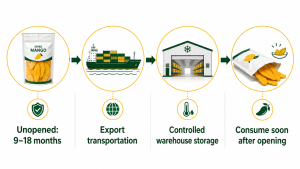
These figures are general commercial references rather than a universal guarantee. The actual shelf life must be determined for each product formulation, processing method, packaging format, and target market.
For example, soft-dried mango with a chewy texture may contain more residual moisture than crispy dried mango. It therefore requires carefully controlled processing and more protective packaging. Products made without preservatives may also need a different shelf-life validation protocol from products containing approved preservatives.
A reliable supplier should not assign an expiry date based only on industry averages. The stated shelf life should be supported by product specifications, packaging performance, storage studies, microbiological controls, and applicable regulations in the destination market.
What Determines Dried Mango Shelf Life?
Several connected factors determine whether dried mango remains stable for nine months, twelve months, or longer.
1. Moisture Content
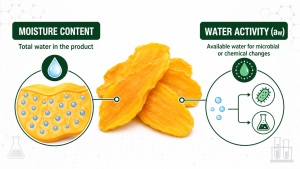
Moisture content is the total quantity of water present in dried mango. It directly affects texture and product stability.
If the moisture level is too high, the product may become excessively sticky, develop off-flavors, or face an increased risk of yeast and mold growth. If moisture is too low, the mango may become hard, brittle, or less appealing to consumers looking for a naturally soft texture.
The correct target depends on the desired product format:
- Soft and chewy dried mango
- Low-sugar dried mango
- Sweetened dried mango
- Organic or preservative-free dried mango
- Crispy or intensely dried mango
- Industrial mango ingredients for cereals, bakery products, or snack mixes
For B2B sourcing, buyers should request an agreed moisture specification rather than relying only on descriptions such as “soft,” “chewy,” or “premium.”
2. Water Activity
Moisture content and water activity are related, but they are not the same measurement.
Water activity, commonly written as aw, indicates how much water is available to support microbial growth and chemical reactions. The U.S. Food and Drug Administration explains that water activity affects food stability and must be brought to an appropriate level after drying and maintained during storage.
This distinction is important because two dried mango samples can have similar total moisture content but different water activity values, depending on their formulation and how strongly the water is bound within the product.
Effective dried mango moisture control should therefore evaluate both:
- Total moisture content
- Water activity of the finished product
Water activity should be treated as a validated product parameter rather than assumed from appearance or texture. Buyers can request the target specification, test method, testing frequency, and acceptable tolerance from their manufacturer.
3. Packaging Barrier Performance
Dried mango can absorb moisture from the surrounding environment. This is especially relevant when products are exported through tropical ports or shipped during humid seasons.
The FDA advises manufacturers using dehydration as a process control to select packaging that prevents rehydration under expected storage and distribution conditions. This means that an attractive retail pouch is not automatically suitable for export.
Effective dried-fruit packaging should control the transmission of:
- Water vapor
- Oxygen
- External odors
- Light, when color protection is required
- Physical contamination
The packaging structure must also maintain seal integrity throughout handling, container loading, ocean freight, warehousing, and retail distribution.
4. Oxygen Exposure
Oxygen can accelerate quality deterioration in dried fruit. It may contribute to:
- Darkening or color changes
- Flavor oxidation
- Loss of fresh mango aroma
- Reduction in sensitive nutrients
- Shorter sensory shelf life
A low oxygen-transmission rate can help protect the product, but film selection alone is not enough. Weak seals, pinholes, damaged pouches, or excessive residual air may reduce the effectiveness of the packaging.
Depending on the product and buyer requirements, the manufacturer may consider nitrogen flushing, oxygen absorbers, vacuum packing, or another controlled packing method. Each option should be assessed for technical suitability, cost, destination-market rules, and desired shelf life.
5. Temperature and Storage Conditions
Dried mango is generally distributed as a shelf-stable product, but “shelf stable” does not mean unaffected by the environment.
High temperatures can accelerate browning, oxidation, aroma loss, and texture changes. Frequent temperature fluctuations may also create unfavorable conditions within cartons or containers.
Recommended commercial storage conditions usually include:
- A cool and dry warehouse
- Protection from direct sunlight
- Distance from walls, floors, and heat sources
- Controlled humidity
- Protection from strong-smelling products
- First-expired, first-out inventory management
The exact temperature and humidity limits should follow the manufacturer’s validated product specification.
6. Product Formulation
Dried mango shelf life can vary according to whether the product is:
- Sweetened or unsweetened
- Treated with sulfites or sulfite-free
- Made with approved preservatives
- Organic or conventional
- Soft-dried or fully dehydrated
- Produced with natural flavoring or other ingredients
Sugar, acidity, preservatives, and other formulation factors can affect stability. Nevertheless, formulation must never replace good hygiene, controlled drying, validated moisture levels, or appropriate packaging.
7. Hygiene and Process Control
Drying cannot correct every problem created by poor raw-material handling or inadequate sanitation.
Shelf-life performance begins with:
- Suitable mango maturity
- Raw-material inspection
- Washing and preparation controls
- Hygienic slicing
- Controlled drying conditions
- Prevention of post-drying contamination
- Metal detection or other required foreign-body controls
- Correct packaging-room conditions
- Batch coding and traceability
Importers should assess the whole production system rather than evaluating only the finished mango slices.
Why Dried Mango Moisture Control Matters During Export
Moisture control must continue after the mango leaves the dryer.
During export, dried mango may pass through several environments:
- The production and packing room
- A local warehouse
- Inland transportation
- A seaport or airport
- An international shipping container
- A destination warehouse
- A distributor or retailer
Each stage can introduce heat, humidity, pressure, vibration, or physical damage. If the inner package allows water vapor to enter, the mango may absorb moisture during the journey.
Possible results include:
- Sticky slices
- Mango pieces clumping together
- Softer-than-approved texture
- Surface moisture
- Packaging condensation
- Color deterioration
- Increased spoilage risk
- Consumer complaints
- Reduced remaining shelf life on arrival
For this reason, dried mango moisture control is both a processing issue and a packaging-engineering issue.
Export Packaging for Dried Fruit: Common Formats
The correct export packaging dried fruit format depends on the order size, sales channel, customer requirements, and intended use.
Retail Pouches
Retail-ready pouches are suitable for supermarkets, convenience stores, online sales, and private-label snack brands.
Common features include:
- Heat-sealed construction
- High-barrier laminated films
- Printed branding
- Tear notches
- Resealable zippers
- Transparent windows, when technically suitable
- Various consumer pack sizes
A transparent window may improve product visibility, but it can also affect light and barrier protection depending on the material. The final structure should balance design, shelf life, cost, and market positioning.
Vacuum-Sealed Bags
Vacuum packing removes a significant portion of the air around the mango.
Potential advantages include:
- Reduced oxygen exposure
- Compact pack dimensions
- Less product movement
- Improved efficiency for some bulk shipments
However, vacuum pressure may compress soft mango slices and change their visual presentation. The method should be tested before large-scale production.
Nitrogen-Flushed Packaging
Nitrogen flushing replaces part of the oxygen inside the package with an inert gas.
It may help:
- Reduce oxidation
- Preserve aroma and color
- Maintain a more attractive pouch shape
- Protect delicate product pieces
Its effectiveness depends on residual oxygen levels, gas composition, packaging permeability, seal quality, and process consistency.
Bulk Food-Service or Industrial Packs
Bulk packaging is commonly used by:
- Food-service distributors
- Bakery manufacturers
- Cereal and granola producers
- Snack-mix companies
- Repackers
- Ingredient importers
Bulk dried mango may be packed in sealed food-grade inner bags placed inside strong export cartons. The inner liner provides the primary moisture and oxygen barrier, while the carton provides stacking and physical protection.
Pack size should be selected carefully. An oversized inner bag may remain open for too long after reaching the customer’s facility, increasing exposure to moisture and contamination.
Master Cartons and Palletization
Secondary packaging is essential for international logistics. Strong master cartons help prevent crushing, punctures, and seal damage.
An export packing plan should consider:
- Carton strength
- Net and gross weight
- Inner-bag arrangement
- Pallet dimensions
- Stretch wrapping
- Corner protection
- Container utilization
- Humidity exposure
- Handling marks
- Destination labeling requirements
Good pallet utilization can reduce freight cost, but excessive compression may damage the retail packages or create leakage at the seals.
How Is Dried Mango Shelf Life Validated?
Shelf-life validation should reflect the actual commercial product, not a laboratory sample packed differently from the final order.
A validation program may examine:
- Moisture content
- Water activity
- Yeast and mold
- Relevant microbiological criteria
- Color stability
- Flavor and aroma
- Texture
- Package seal integrity
- Oxygen or water-vapor barrier performance
- Chemical parameters relevant to the formulation
- Sensory acceptance over time
Real-time storage studies provide evidence of how the product behaves under recommended conditions. Accelerated studies may provide earlier indications of deterioration, but they should be interpreted by qualified technical personnel.
The declared best-before period should also allow for realistic supply-chain conditions. A product that remains acceptable only under ideal laboratory storage may not perform the same way after several weeks in a hot shipping container.
Information B2B Buyers Should Request
Before confirming a dried mango order, buyers should discuss the following points with the supplier:
- Declared shelf life from the production date
- Minimum remaining shelf life required upon arrival
- Moisture specification and tolerance
- Water activity specification
- Recommended storage conditions
- Packaging material and barrier properties
- Seal-integrity controls
- Available retail and bulk packaging formats
- Lot coding and traceability
- Microbiological specifications
- Certificate of Analysis availability
- Allergen and sulfite declaration
- Preservative requirements
- Destination-market labeling
- Shelf-life validation method
- Container-loading and pallet configuration
These details should be recorded in an approved specification before production begins.
Signs That Dried Mango Quality Has Declined
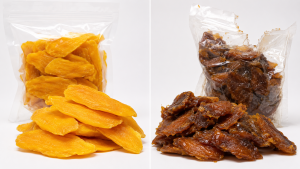
A best-before date is useful, but the physical condition of the product also matters.
Potential warning signs include:
- Visible mold
- Unusual fermentation or sour odor
- Damaged, swollen, or leaking packaging
- Unexpected surface moisture
- Severe clumping
- Abnormal darkening
- Rancid or stale flavor
- Insect activity
- Loss of seal integrity
Natural variation in mango color does not automatically indicate spoilage. However, unusual changes should be investigated against the approved product standard and retained control samples.
Products with visible mold, damaged packaging, or an abnormal odor should not be distributed without proper quality assessment.
How Importers Can Protect Remaining Shelf Life
Shelf life is a shared responsibility between the manufacturer, exporter, importer, and distributor.
Importers can protect product quality by:
- Planning orders around realistic sales forecasts
- Defining minimum remaining shelf life in the contract
- Avoiding prolonged storage at ports
- Inspecting containers for water leakage or damage
- Monitoring warehouse temperature and humidity
- Keeping cartons away from floors and walls
- Using first-expired, first-out inventory rotation
- Inspecting packaging upon arrival
- Investigating damaged seals immediately
- Educating distributors about correct storage
A twelve-month product can still become commercially difficult to sell if it arrives with only a small portion of its shelf life remaining. Production schedules, transit time, customs clearance, and local distribution should therefore be included in purchasing plans.
Sourcing Export-Ready Dried Mango from Vietnam
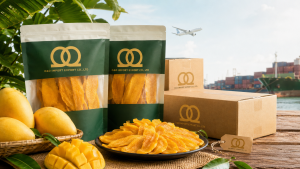
Vietnam offers strong potential for international buyers seeking tropical fruit products, private-label manufacturing, and flexible packaging options.
The right manufacturing partner should help buyers align the mango variety, texture, formulation, moisture specification, packaging structure, pack size, labeling, and logistics plan with the requirements of the target market.
QQIMEX supports international buyers looking for Vietnamese agricultural and dried-fruit sourcing solutions. Explore our dried mango manufacturer in Vietnam page to learn more about product development and B2B sourcing options.
You can also visit the QQIMEX official website for additional product and company information or follow QQIMEX on Facebook for updates.
Frequently Asked Questions
What is the average dried mango shelf life?
Commercial dried mango typically has a shelf life of approximately 9 to 18 months when unopened, correctly processed, packed in suitable high-barrier packaging, and stored under recommended conditions. The final period must be validated for the specific formulation and package.
Does dried mango need refrigeration?
An unopened commercial dried mango product is generally designed for ambient storage. Refrigeration is normally unnecessary unless specified by the manufacturer. After opening, the product should be resealed, protected from moisture, and consumed within the recommended period shown on the label.
Can dried mango last for two years?
Some highly controlled products may be developed for longer storage, but a two-year shelf life should not be assumed. It requires appropriate formulation, validated drying parameters, suitable barrier packaging, controlled storage, and supporting shelf-life evidence.
What packaging is best for dried mango export?
High-barrier heat-sealed pouches or food-grade inner bags inside strong export cartons are commonly used. The best format depends on product moisture, desired shelf life, pack size, shipping route, climate, and customer requirements.
Is moisture content enough to determine product safety?
No. Moisture content measures total water, while water activity indicates how much water is available for microbial growth and chemical reactions. Both parameters may be important in a dried mango control program.
Why does dried mango become sticky inside the package?
Stickiness may result from moisture migration, humid storage conditions, temperature changes, inadequate packaging barriers, or an unsuitable final moisture level. The manufacturer should evaluate the product specification, seal quality, packaging structure, and transportation history.
Conclusion
A premium dried mango product commonly achieves a shelf life of 9 to 18 months, but the final result depends on much more than the expiry date printed on the package.
Reliable shelf-life performance requires controlled raw materials, hygienic processing, validated drying, proper water activity, consistent moisture levels, strong seals, suitable oxygen and moisture barriers, and disciplined storage throughout the supply chain.
For B2B buyers, the best approach is to define shelf life together with product specifications, testing requirements, packaging performance, transit conditions, and minimum remaining shelf life upon delivery. When these elements are aligned, dried mango can maintain its flavor, texture, appearance, and commercial value from the factory in Vietnam to customers in international markets.