
Dried Mango Certification Requirements: FDA, HACCP, ISO 22000, Halal & Kosher Guide
Dried Mango Certification Requirements: FDA, HACCP, ISO 22000, Halal & Kosher
Understanding dried mango certification requirements is essential when sourcing products for wholesale distribution, retail, food service or private-label programs. A competitive quotation and an attractive product sample are not enough. Importers must also confirm that the supplier can meet the food-safety, regulatory and market-access requirements of the destination country.
The required documents may include FDA-related compliance for the United States, HACCP implementation, ISO 22000 certification, Halal or Kosher certification, laboratory test reports, a Certificate of Analysis and export documents such as a phytosanitary certificate.
However, not every certificate is mandatory for every market. Some are legal requirements, some are customer requirements, and others provide additional assurance about the supplier’s food-safety management system.
This guide explains which dried mango exporter certifications B2B buyers should request, how to verify them and what documents should be checked before placing a bulk order.

Why Dried Mango Certification Requirements Matter to B2B Buyers
Dried mango is a processed food product that may travel for several weeks before reaching an overseas warehouse. During sourcing, processing, packaging and transportation, the product can be exposed to biological, chemical and physical hazards.
Possible risks include:
- Pathogenic microorganisms, yeast and mold
- Pesticide residues from raw mangoes
- Undeclared sulphites or other additives
- Foreign materials and metal contamination
- Inconsistent moisture content or water activity
- Allergen cross-contact inside the factory
- Inaccurate ingredient or nutritional labeling
- Packaging failure during ocean transportation
A certified dried mango supplier should have documented systems for identifying, controlling and monitoring these risks. Certifications also help buyers evaluate whether the factory can maintain consistent controls across commercial production—not only prepare a good pre-shipment sample.
Nevertheless, a certificate does not automatically guarantee that every shipment will comply. Buyers should combine certification verification with product specifications, laboratory testing, factory assessment and shipment-level documentation.
Dried Mango Certification Requirements: Mandatory vs Buyer-Requested Standards
One common sourcing mistake is treating every certification as legally mandatory. The actual requirements for importing dried mango depend on the destination, product formulation, intended sales channel and importer’s own quality policy.
| Document or certification | Typical purpose | Requirement status |
|---|---|---|
| FDA food-facility registration | Supports access to the US market | Regulatory requirement when applicable |
| Prior Notice and FSVP records | US import compliance | Importer and shipment-related requirement |
| HACCP certification or plan | Hazard identification and control | Often required by buyers |
| ISO 22000 certification | Food Safety Management System | Voluntary but commercially valuable |
| Halal certification | Suitability for Muslim consumers | Market or customer requirement |
| Kosher certification | Compliance with Jewish dietary rules | Market or customer requirement |
| Organic certification | Organic label and claim verification | Required when selling as certified organic |
| GlobalG.A.P. | Farm-level good agricultural practices | Optional or customer-specific |
| Certificate of Analysis | Batch-level quality evidence | Strongly recommended for each shipment |
| Phytosanitary certificate | Plant-health compliance | Depends on product and destination |
| Certificate of Origin | Origin and customs documentation | Commonly required for customs or tariffs |
The buyer should therefore create a market-specific certification checklist instead of requesting every certificate without understanding its purpose.
FDA Compliance for Dried Mango Exported to the United States
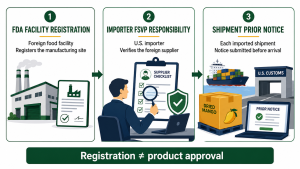
FDA registration is not the same as FDA product approval
The phrase “FDA-approved dried mango” is widely used in international trade, but it can be misleading. The US Food and Drug Administration generally does not pre-approve conventional food products such as dried mango before they enter the market.
For most conventional imported foods, buyers should focus on FDA compliance for dried mango, relevant food-facility registration and importer obligations—not a product-level FDA approval certificate.
Foreign facilities that manufacture, process, pack or hold food for consumption in the United States generally must register with the FDA unless an exemption applies. FDA registration itself does not mean that the agency has inspected, certified or endorsed the factory.
A buyer evaluating a purported US FDA registered dried mango supplier should request:
- The correct legal name and address of the registered facility
- Confirmation that the registration remains current
- The facility’s US agent information, where appropriate
- Evidence that the registration covers the actual manufacturing site
- Confirmation that the exporter and manufacturer are correctly identified
- Relevant food-safety plans and supporting records
The FDA requires registered food facilities to renew their registrations during each biennial renewal period. Importers should therefore avoid relying on an old certificate or registration screenshot without checking its continued validity.
FDA process for imported dried fruit
The FDA process for imported dried fruit involves more than the supplier’s facility registration. Depending on the transaction, US-bound shipments may involve:
- Food-facility registration
- Prior Notice for the imported shipment
- Foreign Supplier Verification Program compliance
- Accurate product and facility identification
- US-compliant ingredient, allergen and nutrition labeling
- Compliance with applicable additive and contaminant requirements
- Entry review or inspection by relevant US authorities
Under the Foreign Supplier Verification Program, most covered US importers must perform risk-based activities to verify that their foreign suppliers produce food according to applicable US safety standards. FDA guidance therefore makes the distinction between a registered facility and a genuinely qualified, verified supplier important.
Importers should work with an experienced customs broker or regulatory specialist to determine the exact requirements for each dried mango product and shipment.
HACCP Certified Dried Fruit Factory
What HACCP means for dried mango production
HACCP stands for Hazard Analysis and Critical Control Point. It is a preventive food-safety approach used to identify significant hazards and establish controls at the appropriate production stages.
A HACCP certified dried fruit factory should be able to demonstrate how its system applies specifically to dried mango production. A generic certificate without a relevant scope provides limited assurance.
Hazard analysis for dried fruit export
A proper hazard analysis for dried fruit export may cover:
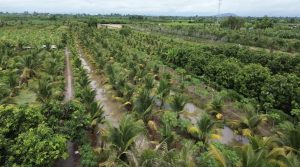
- Raw mango approval and supplier monitoring
- Pesticide and chemical-residue risks
- Washing, peeling and slicing hygiene
- Sulphite or additive dosing, when used
- Drying temperature, time and humidity
- Moisture and water-activity control
- Metal detection or foreign-body prevention
- Packaging integrity
- Allergen and cross-contact management
- Pest control and sanitation
- Product traceability and recall procedures
The factory should identify critical or operational controls based on its actual process. Buyers should not assume that every dried mango factory has the same critical control points.
What buyers should verify
Request the following information from the supplier:
- HACCP certificate and certification scope
- Name of the certification body
- Certificate number
- Issue and expiry dates
- Manufacturing-site address
- Products and processes covered
- Latest audit status, where available
- Summary of the HACCP flow diagram
- Corrective-action and traceability procedures
Effective HACCP food safety management for dried mango must operate daily. It should not exist only as documentation prepared for an external audit.
ISO 22000 Dried Mango Manufacturer
ISO 22000 is an international standard specifying requirements for a Food Safety Management System. It combines food-safety hazard control with system management, prerequisite programs, communication and continual improvement.
Unlike a product test, ISO 22000 evaluates how an organization manages food safety throughout its operations. An ISO 22000 dried mango manufacturer should have structured procedures covering responsibilities, risk management, operational controls, internal audits, corrective actions and management review.
ISO states that certification is voluntary and is carried out by independent certification bodies—not by ISO itself.
What an FSMS for fruit exporters should cover
A reliable Food Safety Management System for fruit exporters may include:
- Approved raw-material suppliers
- Applicable legal and customer requirements
- Prerequisite programs for hygiene and sanitation
- HACCP-based hazard controls
- Employee training and competency
- Calibration of measuring equipment
- Traceability from raw mango to finished shipment
- Non-conforming product controls
- Withdrawal and recall procedures
- Internal audits and management review
- Corrective action and continual improvement
ISO 22000 certification can provide a stronger management framework than a standalone HACCP plan. However, the buyer must still examine whether the certificate covers the correct factory, activity and dried-fruit product category.
Halal-Certified Dried Mango
A Halal-certified dried mango product is particularly relevant when selling to Muslim consumers or distributing in markets where Halal assurance is expected.
Although mango is naturally plant-based, Halal certification may still be important because the evaluation can include:
- Processing aids and food additives
- Flavorings, coatings or sweeteners
- Shared manufacturing equipment
- Cleaning chemicals and sanitation procedures
- Ingredient storage and segregation
- Packaging materials
- Traceability and supplier approval
Buyers should verify whether the certification applies to the product, production site or both. They should also check whether the issuing body is recognized or accepted in the destination market.
A Muslim-friendly dried fruit supplier should be able to provide:
- A valid Halal certificate
- Certified product list
- Manufacturing-site details
- Certification-body information
- Certificate validity period
- Ingredient and additive declarations
- Halal logo-use conditions
“Halal-friendly” or “made without animal ingredients” should not be treated as equivalent to formal certification when the buyer’s market requires certified products.
Kosher-Certified Dried Mango
Kosher certification verifies that ingredients, processing and handling follow applicable Jewish dietary requirements under the supervision of a recognized certification organization.
For a Kosher-certified dried mango, the certifying authority may assess:
- Mango and ingredient sources
- Sugar, oil, flavoring or additive status
- Equipment shared with other products
- Cleaning and production-changeover procedures
- Packaging and handling
- Production supervision requirements
Importers should confirm that the exact dried mango SKU is included in the certification schedule. A supplier may have Kosher certification for one product but not for every formulation or packaging format.
Both Halal and Kosher are important religious food certifications for dried fruit, but one does not replace the other. Requirements, supervision and market recognition differ.
Other Dried Mango Exporter Certifications and Documents
GlobalG.A.P. dried mango supplier
GlobalG.A.P. primarily addresses good agricultural practices at the farm level. It may cover matters such as traceability, worker health and safety, environmental practices and controlled agricultural inputs.
When a buyer requests a GlobalG.A.P. dried mango supplier, it is important to establish whether the requirement applies to the raw-mango farms, producer group or processing company.
GlobalG.A.P. does not replace HACCP or ISO 22000 at the processing facility. It complements factory-level food-safety systems by providing additional assurance regarding agricultural sourcing.
Organic dried mango exporter certifications
If dried mango will be marketed as organic, the exporter and relevant supply-chain operators must comply with the organic rules of the target market.
Buyers should verify:
- Applicable organic standard
- Accredited certification body
- Certified farms and processing sites
- Product scope
- Transaction or inspection certificates when required
- Organic/non-organic segregation
- Labeling approval
- Chain-of-custody documentation
An organic dried mango exporter certification for one market may not automatically support organic claims in another market. Buyers should identify the destination-country rules before confirming packaging or making commercial claims.
Certificate of Analysis for dried mango shipment
A Certificate of Analysis for a dried mango shipment provides batch-specific test results. Unlike HACCP or ISO 22000 certification, which assesses the management system, a CoA provides evidence about a defined production lot.
Depending on the specification and destination, the CoA may include:
- Moisture content
- Water activity
- Total plate count
- Yeast and mold
- Coliforms or E. coli
- Salmonella
- Sulphur dioxide
- Pesticide residues
- Heavy metals
- Foreign-material inspection
- Sensory or physical specifications
The test methods, limits and laboratory competence should be agreed upon before production. Buyers should also confirm whether the CoA is issued by the factory laboratory or an independent accredited laboratory.
Phytosanitary certificate for dried fruit export
A phytosanitary certificate confirms that a plant or plant-derived consignment meets specified plant-health requirements. Whether a phytosanitary certificate for dried fruit export is required depends on the importing country, processing level and commodity classification.
Importers should confirm the requirement with the destination’s competent authority before shipment. A health certificate, phytosanitary certificate, fumigation certificate and Certificate of Analysis are separate documents and should not be used interchangeably.
Customs clearance requirements for imported dried mango
Typical customs clearance requirements for imported dried mango may include:
- Commercial invoice
- Packing list
- Bill of lading or airway bill
- Certificate of Origin
- Product specification
- Ingredient and additive declaration
- Health or sanitary certificate, where required
- Phytosanitary certificate, where applicable
- Certificate of Analysis
- Import permit or product registration, where applicable
- Organic, Halal or Kosher documents for relevant claims
Exact requirements vary by market. Buyers should approve the documentation set before loading the container rather than identifying missing documents after the shipment arrives.
Wholesaler Dried Mango Certification Checklist
Use the following wholesaler dried mango certification checklist before approving a supplier:
| Verification point | What the buyer should check |
|---|---|
| Legal manufacturer | Company name and factory address match all documents |
| Certificate scope | Dried mango and relevant processing activities are covered |
| Validity | Certificate has not expired or been suspended |
| Certification body | Issuer is credible and appropriately accredited |
| Market relevance | Certification is accepted in the destination market |
| FDA status | Registration is relevant, current and not misrepresented as product approval |
| HACCP system | Hazard analysis reflects the actual dried mango process |
| ISO 22000 | FSMS certificate covers the manufacturing facility |
| Halal/Kosher | Exact product and site appear on the approved list |
| Organic status | Standard and chain of custody match the destination market |
| Product specification | Moisture, microbiology, additives and tolerances are agreed |
| CoA | Shipment-level testing matches agreed requirements |
| Traceability | Lot can be traced to raw materials and production records |
| Export documents | Customs and plant-health documents are confirmed |
| Change control | Supplier must report changes in ingredients, process or certification |
Buyers should verify documents directly with the certification body or its public database whenever possible. Blurred copies, expired certificates, mismatched addresses and incomplete scopes are common warning signs.
Evaluating a Certified Dried Mango Supplier in Vietnam
Vietnam is an established source of tropical fruits and processed mango products. However, importers should evaluate each supplier individually rather than relying only on country reputation or marketing statements.
When considering a premium dried mango supplier in Vietnam, review the following:
- Factory certifications and actual scopes
- Raw-material sourcing and traceability
- Drying technology and process controls
- Moisture and water-activity targets
- Microbiological and residue-testing programs
- Packaging suitable for export transportation
- OEM and private-label capability
- Monthly production capacity
- Minimum order quantity
- Sample-to-bulk consistency
- Complaint and recall procedures
Importers evaluating QQIMEX as a dried fruit exporter should request the current certification set, product specification, recent laboratory results and destination-specific documents for the exact product under consideration.
Buyers can explore QQIMEX dried mango products to review available sourcing and private-label options. Additional company and product information is available on the QQIMEX website and QQIMEX Facebook page.
Before presenting QQIMEX—or any exporter—as a certified dried mango manufacturer, buyers should verify the latest certificates and confirm that their scopes cover the intended product, production site and export market.
Frequently Asked Questions
What are the main dried mango certification requirements?
The main dried mango certification requirements depend on the destination market. Common requirements include food-facility registration or market authorization, HACCP-based controls, compliant labeling, shipment documents and laboratory testing. ISO 22000, Halal, Kosher, organic and GlobalG.A.P. may be requested based on the buyer, market or product claim.
Is FDA registration the same as FDA approval?
No. FDA food-facility registration does not mean that the FDA has approved, certified or endorsed the dried mango product or factory. US importers should verify the facility registration and address other applicable responsibilities, including Prior Notice, FSVP and labeling compliance.
Should buyers require both HACCP and ISO 22000?
The answer depends on the buyer’s risk policy. HACCP focuses on identifying and controlling food-safety hazards. ISO 22000 provides a broader Food Safety Management System that incorporates HACCP principles and management-system requirements. Many B2B buyers prefer a supplier with both robust HACCP implementation and a recognized FSMS certification.
Are Halal and Kosher certificates mandatory for dried mango?
They are not universally mandatory. They become important when required by the destination market, retailer, distributor or consumer positioning. Buyers should verify that the exact product and manufacturing location are included in the certificate scope.
Does every dried mango shipment need a Certificate of Analysis?
A CoA may not be legally mandatory for every destination, but it is strongly recommended for commercial imports. A shipment-specific CoA helps confirm that the production batch meets the agreed microbiological, chemical and physical specifications.
How can buyers verify dried mango exporter certifications?
Check the legal entity, factory address, certificate number, product scope, issuing body, accreditation and expiry date. Whenever possible, verify the certificate through the certification body’s official database and request the latest audit or certification information directly from the supplier.
Conclusion: Verify Certifications Before Placing a Bulk Order
Certifications are not simply logos for packaging or sales presentations. They provide evidence that a supplier has established controls relevant to food safety, quality management, religious-market access or organic claims.
For importers and wholesalers, the correct approach is to define destination-specific quality standards for dried mango export, request the relevant certificates and verify every document against the actual factory and product.
A reliable sourcing assessment should cover:
- Market-specific regulatory compliance
- HACCP and food-safety controls
- ISO 22000 or another suitable FSMS
- Halal, Kosher or organic certification where required
- Product specifications and laboratory limits
- Shipment-level Certificate of Analysis
- Traceability and export documentation
Looking for a reliable dried mango wholesale supplier for bulk, OEM or private-label orders?
Contact the QQIMEX export team to request product samples, technical specifications, current certification documents, recent test reports and a quotation for your target market. Verify all applicable documents before confirming a commercial-volume order.