
Dried Fruit Sample Approval Process: 8 Controls for B2B Buyers
A dried-fruit sample can look excellent and still be a poor reference for a commercial order. It may not identify the formula, production method, packaging or lot. It may have been selected from a different specification than the quotation. Even when the product itself is suitable, informal approval through a short message such as “sample is okay” leaves too much room for different interpretations.
A documented dried fruit sample approval process turns the sample into a controlled commercial reference. It connects the buyer’s brief, sample code, specification, packaging, test requirements and production release. This is especially important for importers, wholesalers, distributors and private-label brands that need repeatable quality across orders.
This guide presents eight practical controls for approving Vietnamese soft-dried fruit samples. It does not prescribe universal moisture, shelf-life, MOQ, lead-time or laboratory limits. Those values must be confirmed for the actual fruit, formula, package, destination and supplier proposal.
For a broader supplier-selection framework, begin with QQIMEX’s Vietnam soft-dried fruit manufacturer sourcing guide. Then use the process below to move from a sourcing brief to an approved, traceable reference.

Why Sample Approval Needs More Than a Taste Test
Sensory evaluation matters, but it is only one part of approval. The buyer also needs to know what the sample represents and whether the supplier can reproduce it under commercial conditions.
A useful approval system answers five questions:
- Which product and formula was sampled?
- Which written requirements apply?
- What did the buyer evaluate and accept?
- Which changes require a new approval?
- How will the approved reference be transferred to production and shipment control?
Without these links, the supplier may receive feedback about color, sweetness or texture without knowing which version the buyer means. The buyer may later compare a commercial batch with an unlabelled pouch that has no reliable identity.
Sample Types Buyers Should Distinguish
Not every sample has the same purpose. Define the sample stage before evaluating it.
| Sample type | Main purpose | Buyer decision |
|---|---|---|
| Catalogue or standard sample | Shows an existing supplier concept | Suitable for further development or not |
| Development sample | Tests a requested formula, cut or texture | Revise, reject or advance |
| Packaging mock-up | Reviews dimensions, artwork placement and pack presentation | Approve design direction, not product performance |
| Pre-production sample | Confirms the proposed commercial configuration before the run | Release, revise or hold production |
| Shipment or retention sample | Represents a completed commercial batch | Support release, arrival review or investigation |
A catalogue sample should not automatically become the final commercial reference. Likewise, a visual packaging mock-up does not prove seal performance or shelf-life suitability. Record the role of each sample clearly.
1. Issue One Controlled Product Brief
Start the dried fruit sample approval process with a written brief, not a general request for “premium dried fruit.” The same brief should be sent to every shortlisted supplier when the buyer wants comparable proposals.
Include:
- Fruit type and intended product name
- Soft, soft-chewy, firm-chewy or other target texture
- Cut, dimensions or piece format
- Complete ingredient and additive requirements
- Sweetened, low-sugar or no-added-sugar concept, subject to formula confirmation
- Desired sensory direction and unacceptable defects
- Bulk, foodservice or retail/private-label application
- Destination country and sales channel
- Packaging format and target net weight
- Required documents, tests and label inputs
- Estimated order requirement and preferred Incoterm
Mark open items as “to be proposed” instead of guessing. Ask the supplier to identify every assumption in its sample submission and quotation. QQIMEX’s private-label dried fruit supplier guide explains why product, packaging and approval decisions should be connected during OEM development.
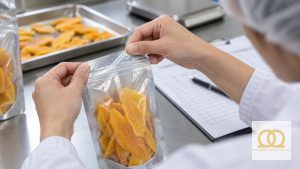
2. Require a Unique Sample Code and Submission Record
Every submitted sample should have a unique code. The code may be simple, but it must distinguish the fruit, version and submission date. If a formula or process condition changes, the revised sample needs a new code.
The submission record should state:
- Sample code and date
- Product description
- Formula or ingredient declaration
- Cut and intended texture
- Processing description supplied by the manufacturer
- Packaging used for the sample
- Draft specification or target attributes
- Known differences from the proposed commercial product
- Storage and handling instructions
- Supplier contact responsible for the submission
Do not accept a sample as fully representative if the supplier says the commercial product will use another formula, film or process but cannot explain the difference. The buyer may still evaluate the concept, yet the approval status should remain conditional.
3. Inspect Arrival Condition Before Opening
Delivery can reveal packaging or handling risks. Photograph the parcel and sample packs before opening. Record the arrival date, sample code, visible damage and storage condition on receipt.
Check for:
- Punctures, open seals or leakage
- Excessive air loss or pack deformation
- Condensation or unexpected moisture
- Oil, syrup or sticky residue outside the package
- Discoloration visible through the pack
- Missing or unclear identification
- Unusual odor immediately after opening
An arrival problem does not always prove a manufacturing failure. It may result from temporary sample packaging, courier conditions or handling. Record the evidence and ask for a cause assessment rather than silently discarding the sample.
4. Use a Structured Sensory and Physical Scorecard
Evaluate samples under consistent conditions and use the same scorecard for every version. The review team may include procurement, product development, quality and commercial representatives because each function sees different risks.
Suggested evaluation areas include:
- Fruit identity and characteristic aroma
- Color range and surface appearance
- Shape, dimensions and piece consistency
- Softness, chewiness and fibrousness
- Sweetness, acidity and overall flavor balance
- Surface stickiness or dryness
- Broken pieces and visible defects
- Seed, peel or foreign-material concerns where relevant
- Aftertaste and intended consumer fit
Avoid approving only with subjective words such as “nice,” “natural” or “premium.” Convert important observations into a written requirement or an approved sensory reference. If preferences conflict, consolidate feedback into one decision document before sending it to the supplier.
5. Align the Sample With the Written Specification
The approved product specification should describe what the supplier is expected to reproduce. It should match the sample version and quotation.
Review these specification areas:
| Area | Approval question |
|---|---|
| Product identity | Does the name distinguish fruit, format and relevant formula? |
| Ingredients | Does the declaration match the evaluated sample? |
| Physical criteria | Are cut, dimensions and defect tolerances defined where needed? |
| Sensory criteria | Are color, aroma, flavor and texture described clearly? |
| Analytical criteria | Are product-specific requirements, methods and tolerances agreed? |
| Microbiological/chemical controls | Is the required scope appropriate to the product and market? |
| Packaging | Are material, net weight, seal, coding and carton details identified? |
| Storage and shelf life | Is the statement supported for the exact product and pack? |
Do not copy moisture, water-activity, microbiological or residue limits from another fruit without technical justification. Confirm the applicable destination-market requirements and buyer standard. QQIMEX’s dried mango certification requirements guide provides a useful method for checking document identity, scope, validity and relevance.
FDA food-facility registration is not FDA approval of a product or factory. Keep this distinction in specifications, supplier files and marketing claims.
6. Approve Product and Packaging as One System
Product approval does not automatically approve the commercial packaging. A small temporary sample pouch may protect the product differently from the final retail or bulk format.
Before commercial release, confirm:
- Primary packaging material and structure proposed by the supplier
- Net weight and pack dimensions
- Seal type and closure features
- Lot code, date marking and storage statement
- Retail artwork and mandatory label information
- Inner-pack and export-carton configuration
- Pallet or handling requirements where applicable
- Evidence supporting shelf life in the selected packaging
Artwork approval should use a version number or dated filename. Record who approved the regulatory text, brand design and print proof. Any change to formula, pack material, size, zipper, window or coding area may require a new technical review.
The QQIMEX guide to dried mango shelf life and export packaging explains how product condition, packaging barrier, seals and storage work together. Apply the review logic to the selected fruit, but require evidence for the exact proposed product.

7. Establish a Golden Sample and Change-Control Rule
Once a sample is approved, identify it as the controlled reference or “golden sample.” Record the code, approval date, associated specification version and approvers. Where practical, both buyer and supplier should retain representative sealed samples under suitable conditions.
A golden sample is most useful for sensory and visual comparison. It does not replace measurable criteria, laboratory testing or legal compliance. Physical samples also change over time, so the written specification remains essential.
Define which events trigger reapproval. Examples may include:
- Fruit variety or raw-material source change that may affect the product
- Formula or ingredient change
- Cut, process or drying-condition change
- Manufacturing-site change
- Packaging-material or pack-size change
- Shelf-life or storage-statement change
- Significant deviation from the approved sensory reference
The supplier should not implement a material change silently. Agree who evaluates the impact, what evidence is needed and whether a new sample code must be approved.
8. Transfer Approval Into Production, MOQ and Logistics
The final control is the bridge from sample to purchase order. State in the order documents which specification, sample code, artwork version and packaging configuration apply.
Before production, confirm:
- Signed or otherwise formally approved product specification
- Golden-sample code and approval status
- Final ingredients and label inputs
- Commercial packaging and artwork version
- Product MOQ and printed-packaging quantity separately
- Agreed testing, inspection and release requirements
- Incoterm, destination and shipment-document expectations
- Order-specific lead-time confirmation and dependencies
- Responsibility for production release and shipment approval
There is no universal MOQ or lead time for dried-fruit projects. Both depend on the selected product, packaging, printing and supplier schedule. Request written confirmation for the actual configuration.
During production, ask how the manufacturer controls raw-material receiving, preparation, drying, inspection, packing and batch release. QQIMEX’s factory audit checklist helps buyers examine whether documented controls are followed in practice.
Before shipment, verify quantity, coding, package condition, carton configuration, required test records and commercial documents. QQIMEX’s dried mango import guide provides a wider purchasing and logistics workflow that can be adapted to other dried-fruit orders.
Dried Fruit Sample Approval Checklist
Before issuing a purchase order, confirm that the buyer has:
- Sent one controlled product brief
- Received a uniquely coded sample with a submission record
- Documented arrival condition
- Completed sensory and physical evaluation
- Consolidated comments into one decision
- Matched the sample to an approved specification
- Verified product-specific compliance and testing requirements
- Approved the commercial packaging and artwork version
- Identified the golden sample and retention method
- Defined changes that require reapproval
- Linked the approved references to the purchase order
- Confirmed MOQ, lead time, logistics and release responsibilities in writing
Use clear status labels: approved, rejected, or conditionally approved subject to stated actions. Do not allow an unanswered email or informal conversation to become production authorization.
Frequently Asked Questions
What is a dried fruit sample approval process?
It is a documented method for linking a buyer’s product brief, coded sample, evaluation results, specification, packaging and production decision. It helps both parties understand exactly what was approved.
What is a golden sample?
A golden sample is the identified physical reference accepted by the buyer and supplier for visual and sensory comparison. It supports—but does not replace—the written specification and measurable release criteria.
Should a buyer approve a sample by photograph?
A photograph can support appearance review but cannot reliably demonstrate aroma, flavor, chew, stickiness or package condition. Physical evaluation is recommended before commercial production.
Does approving a product sample also approve the packaging?
No. Product, packaging material, artwork and print proof should have clear approval records. Shelf-life support should relate to the actual commercial product and pack.
When should a dried-fruit sample be reapproved?
Reapproval may be needed when the formula, ingredients, process, manufacturing site, raw material, packaging or another factor affecting the approved product changes. The parties should define the triggers in advance.
Can one approved sample cover every future batch?
The sample can remain a reference, but each commercial batch must still comply with the specification, testing and release requirements. Retained samples may also change during storage.
Is FDA registration the same as FDA approval?
No. FDA food-facility registration must not be presented as FDA approval of the product or manufacturing facility.
Conclusion: Make Approval Reproducible
A strong dried fruit sample approval process does more than identify which pouch tasted best. It creates a traceable path from buyer brief to coded sample, specification, packaging, golden reference, production release and shipment review.
The eight controls in this guide help reduce version confusion, undocumented changes and disagreements about commercial quality. They also give importers, wholesalers and private-label brands a more reliable basis for comparing suppliers and managing repeat orders.
To discuss a Vietnamese soft-dried fruit sourcing or private-label project, contact QQIMEX through the QQIMEX website. Include the target fruit, formula direction, destination market, packaging format and estimated requirement so the team can clarify the information needed for sample development.